Showing posts with label waste. Show all posts

Monday, April 5, 2010

Michael Jackson and Dr. Murray

The long time readers of this blog will recall my previous post concerning the possibility that the desperately addicted Michael Jackson might have supplemented Dr. Murray's propofonol with an additional injection by himself (Jackson).

I wrote to the Texas legal team concerning this possibility. I don't know whether they paid attention or not to specifically me, but now there is a news report that Dr. Murray's legal team is considering using exactly the defense I proposed.

Sunday, October 12, 2008

One woman's trash...


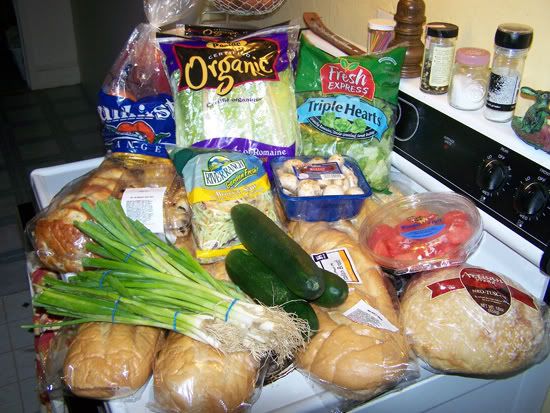
typical of a haul from the Baltimore collective

I don't know how possible this is everywhere, but some friends and I have been trying to create an infrastructure for catching useful waste before it gets to the dump. Dumpster diving is by no means new, but it's becoming more profitable and important as our businesses throw away more and more useable material. A lot of what's there to be had is edible food, but dumpsters also provide household goods, flowers, clothes, you name it.

My friend Mike started a collaborative website for Baltimore and organized a weekly collective to make the endeavor more profitable for everyone. Members meet at his house Tuesday nights, or coordinate via a listserv, to divide into pairs or groups which each go to a different dumpster. Since it's most common to find a whole lot of one kind of thing (bagels, juice, produce) at one dumpster, they collect as much as they can and meet back at the house to divide it up. That way, everyone gets a reasonable amount of each category and ends up with a balanced haul.

Of course, dumpster diving is a pretty maligned practice, which leads to some risks. The legality issue is kind of fuzzy, and one has to be especially careful of trash trucks coming to empty the dumpster. (That's another advantage of the collective: the buddy system works, and we can publicize collection times.) The most common concern is food safety, but I think most people would be surprised at how much food is thrown away in almost-perfect condition and in clean plastic containers.

So grab a buddy, empty out your car, and head on down to the local supermarket or cafe. It might take a while to find a location with a reliable source, but once you do it's amazing how much free food you can get out of a fundamentally flawed system.

ETA: my roommate Wes and I did a walking tour of the dumpsters in our neighborhood, which didn't yield much besides a nice Sunday afternoon stroll. But, I did stop in at the Subway to ask them straight-up if I could have the bread they would otherwise throw away at the end of the day. The guy behind the counter seemed dubious but said if I came back at 15 minutes to closing (9:45) he would see what he could do. When I went back just now, he filled a plastic bag the size of a grocery sack with 13 loaves of slightly-stale (just the very ends) bread. I hung it on my handlebars and pedaled home with garbage-juice-free bread!

Tuesday, September 23, 2008

Anti-Plastic

There is no doubt that plastics have changed the world. The uses and structures of plastics are seemingly endless. Yet plastic is a threat to our earth and safety.

BPA, a hormone disruptor, is found in certain types of plastic. It has been considered potentially toxic since the 1930’s, but has been leaching its way out of our containers and toys and into our bodies for decades. It is found in the urine of 95% of Americans, and evidence is suggesting it may be causing heart disease and Type 2 diabetes. Phthalates are added to plastics to increase flexibility, and are suspected to cause neurological and reproductive damage. Some people believe you should try not to touch plastic too often, and never let it touch your food.

Many plastics do not biodegrade, and when they do, it is estimated to take hundreds of years. Other plastics Photodegrade instead, meaning they break down into smaller and smaller pieces when exposed to sunlight. The small pieces then contaminate our soil and water and eventually enter the food supply when they are eaten by organisms. Plastic particles now outnumber plankton in some parts of the ocean, 6 to 1.

But I recycle! Well, it is not enough. Less the 6% of plastics are recycled. Only plastic numbers 1 and 2 can be recycled in our neighborhood. Some places also recycle number 5. Even when recycled, they are really being downcycled to a non-recyclable end product. The majority of plastics end up back in the landfill the same year they are produced. Reuse is not always an option, as some plastics are only considered safe for one time use. Most plastic is also a petroleum product, a non-renewable resource.

I am not ready to give up using shampoo and deodorant, but there are many ways we can easily work to reduce our plastic use. I heard one estimate that suggests 2/3 of plastic waste can easily be avoided, though the remaining 1/3 is very hard to eliminate. You can start by avoiding disposable products, in favor of reusable ones. Chose products with less packaging, buy natural fibers, ask for no straw, lid or excess plastic packaging. Buy high quality wood, metal and glass items instead of cheap plastic alternatives. If you are going to buy plastics, look for used items, or items made from recycled materials.

Tips
  • Buy glass or stainless steel food storage containers
  • Get a Klean Kanteen for beverages
  • Use cloth diapers; try Bumkins or a diaper service
  • Consider using washable feminine hygiene products
  • Get cloth bags, including compact bags for your car, purse, backpack and diaper bag and produce bags for produce and bulk foods
  • Use paper-packaging tape
  • Avoid prepared foods, too much plastic packaging
  • Metal camping dishes are great for babies and kids
  • Make your own yogurt (its easy - you can borrow the yogurt maker my neighbor gave me, but it is made of plastic)
  • Don’t use paper towels or paper napkins (they come wrapped in plastic), get extra washcloths and cloth napkins, and throw them in with your regular wash
  • Buy toilet paper in individual rolls, wrapped with paper
  • You can even get glass straws
  • Carry a set of reusable eating utensils, or keep a set in your desk at work
  • Any other ideas?

Links